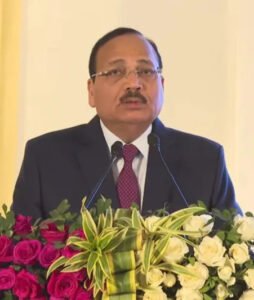

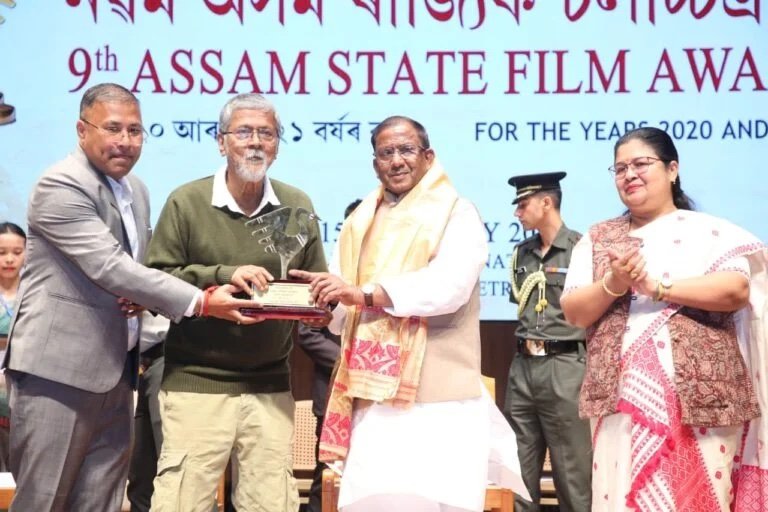
Assam – The cultural richness and future promise of Assamese cinema were celebrated at the 9th Assam State Film Awards, where Governor Lakshman Prasad Acharya underscored the industry’s enduring role in shaping the state’s identity.
Speaking at the ceremony on February 15 at the Sri Sri Damodardeva International Auditorium, the Governor described the awards as a testament to Assam’s artistic vitality. He noted that the state’s language, folk traditions, and storytelling have long defined its cultural character, and cinema has carried these traditions to wider audiences.
Paying homage to pioneers, he recalled Jyotiprasad Agarwala’s landmark film Joymati, which laid the foundation of Assamese cinema despite limited resources. He said the film’s themes of sacrifice, history, and women’s empowerment remain significant even today. The Governor also remembered Bhupen Hazarika, whose music conveyed messages of humanity and unity while bringing Assamese culture global recognition, and acknowledged Zubeen Garg’s role in connecting younger audiences to their cultural roots through contemporary music and cinema.
He pointed to national initiatives such as Digital India, Startup India, and Make in India, saying these programmes have opened new opportunities for regional creative industries, including Assamese cinema. Films, he added, are not only a medium of entertainment but also a powerful tool for raising awareness on issues such as social justice, women’s empowerment, and environmental protection.
Despite financial challenges, the Governor observed that Assamese cinema has earned acclaim at both national and international platforms, particularly in the digital era. He reaffirmed the state government’s commitment to strengthening film infrastructure and nurturing young talent, with a vision to establish Assam as a leading film hub in the Northeast.
The event was attended by Cultural Affairs Minister Bimal Bora, MP Bijuli Kalita Medhi, Additional Chief Secretary B. Kalyan Chakravarthy, as well as officials from the Assam State Film (Finance and Development) Corporation Limited and the Department of Cultural Affairs.