
Environment Minister Jayanta Malla Baruah appeals for responsible tourism and stronger protection measures as migratory Amur falcons arrive at key stopover locations across the state.
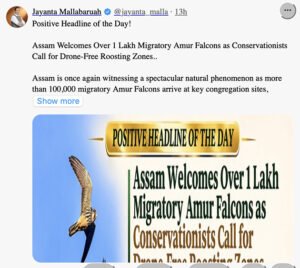
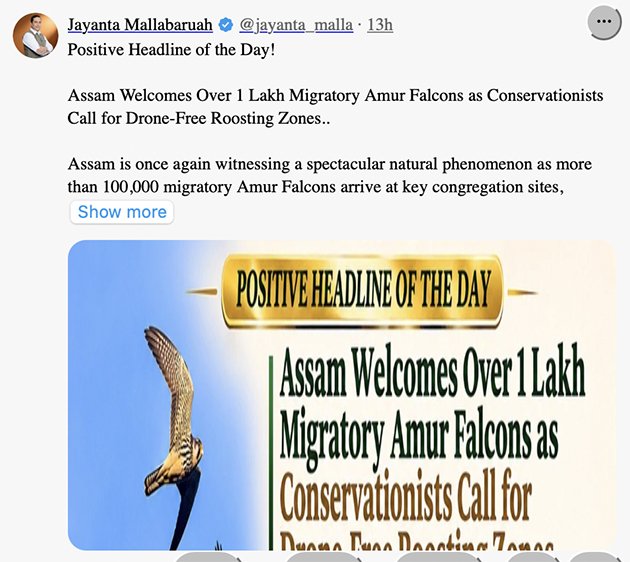
More than one lakh Amur falcons have arrived in Assam during their annual migration, prompting the state government to appeal for stricter safeguards around major roosting sites to ensure the birds are not disturbed during their long journey.
In a message shared on social media, the minister highlighted the ecological significance of the migration and stressed the need to protect the birds while they rest and replenish their energy reserves.
Environment and Forest Minister Jayanta Malla Baruah said large numbers of the migratory raptors have been sighted in areas including Umrangso in Dima Hasao district and Dharamtul in Morigaon district. The birds use Assam as an important stopover during their migration between East Asia and southern Africa, one of the longest migratory journeys undertaken by any bird species.
Baruah cautioned against the use of drones near roosting locations, noting that unregulated aerial activity could disrupt the birds and expose them to potential harm. He said the presence of drones may trigger panic among large flocks, increase the risk of collisions and interfere with crucial feeding and resting periods.
The minister noted that conservationists have expressed concern over the growing use of drones around congregation sites. According to him, repeated disturbances can place additional stress on the birds at a critical stage of their migration.
Referring to recommendations made by biodiversity conservation organisation Aaranyak, Baruah said authorities have been urged to establish no-drone buffer zones around important falcon habitats in Umrangso and Dharamtul. The organisation has also sought stricter monitoring of unauthorised drone operations and wider awareness campaigns aimed at tourists, photographers and content creators visiting the sites.
Emphasising the importance of responsible tourism, the minister said wildlife conservation should remain a priority over the pursuit of photographs and aerial footage. He also underscored the role of Assam’s forests, wetlands and traditional roosting habitats in supporting migratory species and preserving the state’s rich biodiversity.
Calling on the public to support ongoing conservation efforts, Baruah urged visitors to follow guidelines designed to minimise disturbance to the birds and help ensure their safe passage through the region.