
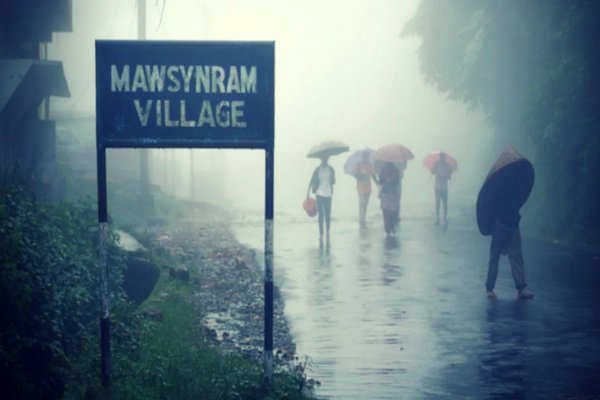
A severe shortage of rainfall during both the southwest monsoon and the post-monsoon period has deepened concerns over water availability in Meghalaya, with all districts reporting sharply below-normal precipitation and officials warning of growing pressure on spring-fed water sources.
Shillong, Meghalaya: Meghalaya witnessed an alarming decline in rainfall during October, receiving only 38.3 mm against the long-term average of 255 mm, according to data released by the India Meteorological Department (IMD). The substantial shortfall comes on the heels of a weak monsoon season and has heightened concerns about the state’s water resources.
Official figures show that Meghalaya recorded 1,077.1 mm of rainfall between June and September, far below the seasonal norm of 2,695.3 mm. The figures indicate a significant deficit during the southwest monsoon, a period on which the state’s water systems largely depend.
Rainfall performance deteriorated steadily through the monsoon months. While the deficit remained relatively moderate in July, the gap widened considerably in August as rainfall levels fell well short of normal. Meteorological data suggest that the weakening trend continued into the post-monsoon period, culminating in an exceptionally dry October.
The shortage was reported across every district of the state. IMD records classified all 11 districts under the “large deficient” category, reflecting a widespread decline in precipitation rather than isolated localised deficits.
Among the worst-affected districts were South West Garo Hills, East Jaintia Hills, North Garo Hills and East Khasi Hills, each recording rainfall levels far below their seasonal averages. Significant deficits were also observed in West Garo Hills, West Khasi Hills, South West Khasi Hills, East Garo Hills, West Jaintia Hills, Ri Bhoi and South Garo Hills.
Meteorological authorities categorise rainfall deficiencies ranging from 60 to 99 per cent as “large deficient”, underscoring the severity of the situation across Meghalaya.
The prolonged dry spell has renewed concerns over drinking water availability, particularly in rural and hill areas where communities depend heavily on natural springs for household needs. Reduced rainfall is likely to affect groundwater recharge and spring discharge, potentially impacting water supply during the coming months.
The issue has already drawn attention from the state government. Chief Minister Conrad K. Sangma had earlier noted that a number of projects implemented under the Jal Jeevan Mission were encountering difficulties due to weakening water sources, changing rainfall behaviour and broader climatic shifts.
Given Meghalaya’s terrain, spring-fed systems remain the primary source of water for a large section of the population. Experts have cautioned that extended periods of low rainfall could further reduce the flow from these sources, complicating efforts to ensure a stable supply of drinking water outside the monsoon season.
Recognising the challenge, the Public Health Engineering Department has undertaken extensive mapping of springs and springsheds across the state. Hundreds of vulnerable water sources have been identified for restoration and conservation measures as part of efforts to strengthen long-term water security.
With rainfall continuing to remain well below normal, concerns are growing over the health of Meghalaya’s spring ecosystems, prompting renewed focus on conservation and rejuvenation initiatives aimed at safeguarding the state’s water resources.