
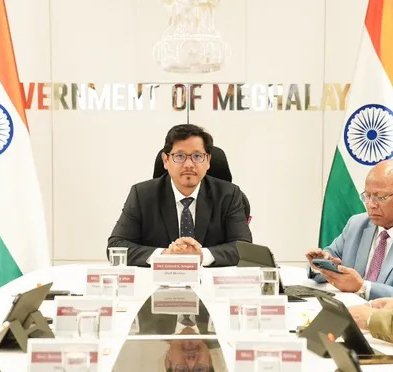
Meghalaya – The Meghalaya government is set to present its long-awaited State Reservation Policy Report in the Assembly on February 18, during the ongoing Budget Session. Chief Minister Conrad K. Sangma confirmed the Cabinet’s approval of the move on February 17, describing it as a significant step toward addressing long-standing concerns over equitable representation.
The report carries major implications for tribal communities in the state. It proposes a restructuring of how government jobs and educational seats are distributed among the Khasi, Jaintia, and Garo groups, alongside provisions for other Scheduled Tribes, Scheduled Castes, and unreserved categories.
At the core of the recommendations is a plan to earmark 80 percent of government positions for Scheduled Tribes, with equal shares of 40 percent each for the Khasi and Garo communities. The framework also includes allocations for other tribal and caste groups, as well as open-category candidates.
Meghalaya’s current reservation system, introduced in 1972, has faced criticism for failing to reflect demographic shifts and economic realities over the decades. An expert committee was tasked with reviewing the policy, examining population data and financial conditions to assess whether the existing structure remains fair.
The committee’s findings also highlight the importance of ensuring opportunities for local candidates in district-level appointments, while reinforcing protections for tribal populations.
Cabinet Minister Wailadmiki Shylla acknowledged the development on February 16 but refrained from disclosing details ahead of the Assembly presentation.
Given the sensitivity of reservation policies in Meghalaya—where tribal identity and community representation are deeply intertwined with politics—the tabling of the report is expected to trigger intense debate among legislators and stakeholders.