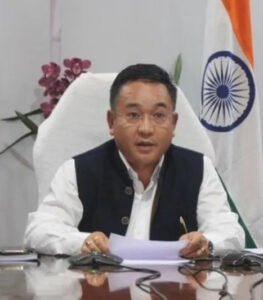


Aizawl – The Mizoram government has approved an expansion of its flagship Chief Minister’s Rubber Mission, adding 173 hectares under the second phase of the initiative. The decision was finalized during a high-level meeting chaired by Chief Minister Lalduhoma and attended by officials from the Mizoram Rubber Society (MIRSO).
With this addition, the total area covered under the second phase now stands at 2,400 hectares. Of this, 1,373 hectares will be developed under the state’s Handholding Scheme, while the remaining portion will be supported through funding from the National Bank for Agriculture and Rural Development (NABARD). The move is expected to benefit farmers in Mamit district, which borders Tripura and Bangladesh, where rubber cultivation has emerged as a viable source of income.
To further strengthen the sector, the Chief Minister announced plans to establish 100 rubber processing units across the state, offering subsidies to encourage local entrepreneurship and improve production capacity. Officials said the initiative is aimed at empowering rural communities and promoting sustainable livelihoods through agro-based industries.
In a separate development, the Adivasi Adhikar Rashtriya Manch (AARM) has written to the Registrar General and Census Commissioner of India, urging the inclusion of Adivasi faiths as distinct religious categories in the upcoming national census. AARM leader Jitendra Chaudhury emphasized that tribal communities across India follow unique spiritual traditions that are not adequately represented under existing classifications.
Chaudhury cited a resolution passed by the Jharkhand Assembly supporting the demand and called for a dedicated column in the census to reflect these indigenous belief systems. “The invisibility of Adivasi faiths in official data undermines their cultural autonomy and constitutional rights,” he said.
The appeal comes amid growing calls from tribal organizations nationwide to preserve and promote ancestral traditions rooted in nature worship and oral heritage. Advocates argue that recognizing these faiths in the census would be a critical step toward ensuring representation and safeguarding indigenous identities.