
In an era of rapid technological advancement and global connectivity, communities across the world are finding new ways to balance tradition and modernity. Nowhere is this more evident than in Northeast India, a region renowned for its cultural diversity, vibrant traditions and deep-rooted sense of identity.
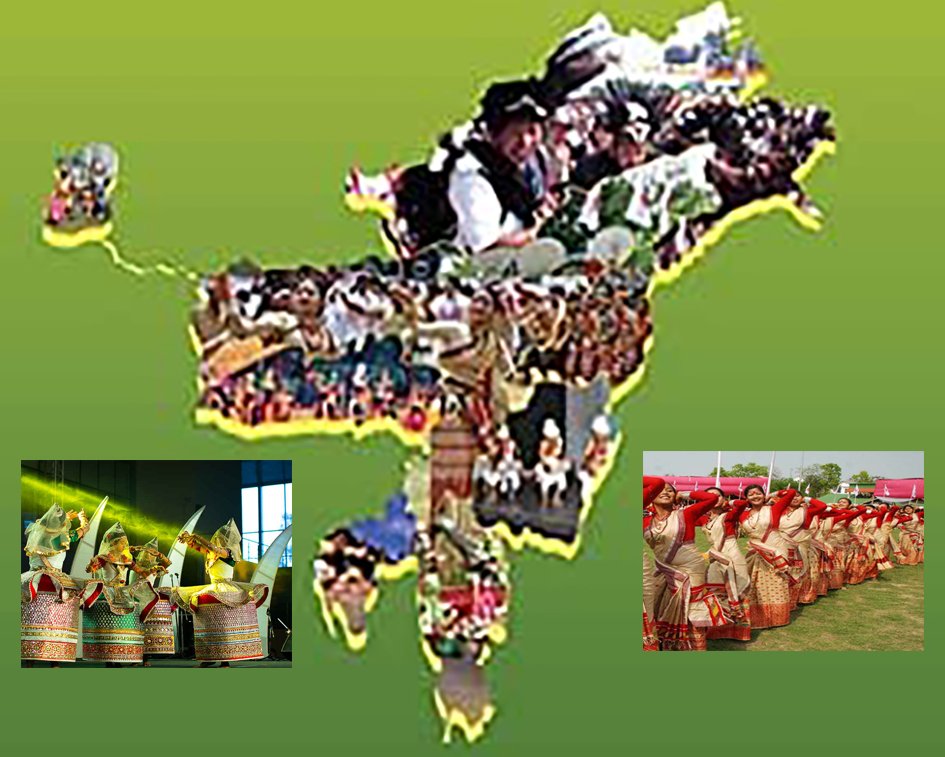
Spread across eight states, the Northeast is home to numerous indigenous communities, languages, art forms and customs that have been nurtured over generations. From the Bihu of Assam and Wangala of Meghalaya to the Hornbill Festival of Nagaland and Chapchar Kut of Mizoram, the region’s cultural landscape reflects a rich tapestry of history and heritage.
As lifestyles evolve and younger generations embrace new opportunities in education, technology and entrepreneurship, traditions continue to hold an important place in society. Cultural practices are not merely remnants of the past; they remain living expressions of community identity and collective memory.
One of the encouraging developments in recent years has been the growing interest among young people in learning about and promoting their heritage. Traditional music, indigenous textiles, folk dances and local cuisines are increasingly finding space on digital platforms, helping regional cultures reach wider audiences both within India and abroad.
The Northeast’s artisans, musicians, storytellers and craftsmen continue to play a crucial role in preserving this legacy. Their work serves as a bridge between generations, ensuring that traditional knowledge and artistic practices remain relevant in a changing world.
Educational institutions, cultural organisations and community groups have also contributed significantly by organising festivals, exhibitions, workshops and research initiatives aimed at documenting and celebrating local heritage. Such efforts help foster cultural awareness while encouraging greater appreciation of the region’s unique identity.
Importantly, preserving culture does not mean resisting progress. Rather, it involves carrying forward valuable traditions while adapting to the realities of the modern age. The ability to embrace innovation without losing touch with one’s roots is a strength that many communities across the Northeast continue to demonstrate.
Culture also plays an important role in promoting social harmony and mutual understanding. The region’s diversity highlights how different communities can maintain their distinct identities while contributing to a shared social fabric. This spirit of coexistence remains one of Northeast India’s enduring strengths.
As the world becomes increasingly interconnected, cultural heritage serves as an anchor that connects people to their history, values and traditions. For Northeast India, preserving this heritage is not only about honouring the past but also about enriching the future.
The region’s cultural wealth remains one of its greatest assets. By valuing and celebrating its traditions while embracing new opportunities, Northeast India can continue to showcase how culture and progress can go hand in hand.
Written by Sakkshi Sharma
Write to us at northeastplus8@gmail.com