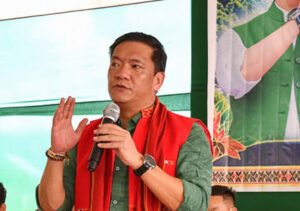

Siang, Arunachal Pradesh: Arunachal Pradesh Chief Minister Pema Khandu has reiterated that the proposed Siang Upper Multi-Purpose Project (SUMP) will not move beyond the initial assessment stage unless studies establish its technical viability.
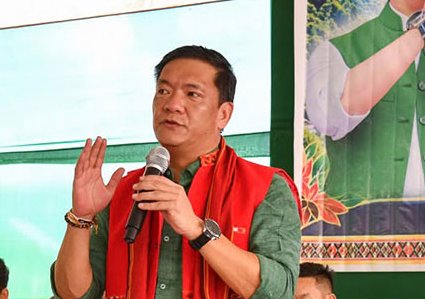
Addressing government officials in Siang district at Boleng, Khandu said the immediate focus is on completing the Preliminary Feasibility Report (PFR), which is expected to provide clarity on whether the project can be implemented, where it could be located and what technical challenges it may face.
He stated that if experts conclude the project is not feasible, no further action will be taken. The study, scheduled to be carried out over the coming months, will examine issues such as engineering suitability in the earthquake-prone region, possible safeguards against upstream water releases, and the availability of appropriate construction sites.
According to the Chief Minister, only if the project is found technically viable would the government proceed with subsequent statutory processes, including Social Impact Assessment (SIA), Environmental Impact Assessment (EIA) and preparation of a Detailed Project Report (DPR).
Khandu stressed that the proposed project should be viewed not only from the perspective of power generation but also in the context of national security and strategic interests. He referred to concerns surrounding large-scale water infrastructure developments upstream and said India must carefully assess available options to protect its long-term interests.
Emphasising the need for an evidence-based approach, he said the project should be evaluated on scientific and technical grounds rather than being supported or opposed without adequate information.
The Chief Minister assured residents that local communities would be closely involved in decision-making if the project advances beyond the feasibility stage. He said the government would conduct detailed consultations with Gram Panchayats, village leaders and affected residents before taking any major decisions.
He further clarified that issues such as land acquisition, compensation, rehabilitation and resettlement would be addressed separately and in accordance with existing laws. Communities that may be affected would be consulted on relocation plans, while essential infrastructure such as roads, schools, electricity and drinking water facilities would be developed in any new settlements.
Khandu also maintained that public opinion would remain central to the process. If consultations and public hearings reveal strong opposition after the completion of technical studies, people would have opportunities to express their views through the prescribed mechanisms.
To address concerns directly, the Chief Minister announced plans to visit villages across the Siang region and interact with residents personally. He said the government is committed to listening to local apprehensions and ensuring that all relevant information is shared transparently.
Highlighting the potential economic impact of the proposed project, Khandu said investments could range between Rs 1.5 lakh crore and Rs 2 lakh crore. Such expenditure, he noted, could generate employment and business opportunities in sectors including construction, transportation, road development, quarrying and other allied activities.
He urged administrative officers to familiarise themselves with all aspects of the project and help foster informed public discussion based on facts, rather than speculation or misinformation.