
Gangtok, Sikkim: The Sikkim government has announced a comprehensive revision of permit regulations governing access to protected, restricted and other regulated areas across the state, along with a new fee structure for tourist vehicles entering designated Reserve Forest zones. The updated rules will come into force from January 1, 2027.
The revised framework was notified by the state Home Department through a notification issued on November 23, 2026. Signed by Chief Secretary R. Telang, the order aims to streamline permit procedures, clearly define the responsibilities of different departments and regulate vehicular movement in environmentally sensitive and strategically important regions.
Under the new system, the Home Department will function as the nodal agency for permit administration. Tourist permits will be processed by the Tourism and Civil Aviation Department, while permits for VIPs and official visits will continue to be handled by the Home Department. The Army will retain authority over permits related to its vehicles and guests.
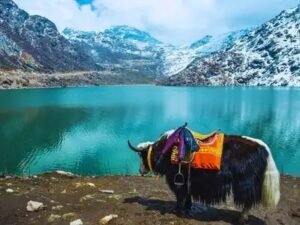
The revised entry fees will apply to tourist vehicles travelling through Reserve Forest areas in the Gangtok and Pakyong divisions, including the popular Nathula-Tsomgo Lake-Baba Mandir-Dzuluk-Lingtam circuit. Similar charges will also be applicable in parts of Mangan district beyond the Sankalang-Toong and Phedang check posts.
According to the notification, four-wheeled vehicles with seating capacity for up to five passengers and engine capacities above 1,000 cc will pay an entry fee of ₹1,500 in the Gangtok-Pakyong sector and ₹1,200 in Mangan. Vehicles accommodating six to ten passengers will be charged ₹2,500 and ₹1,500, respectively.
For Force and Tempo Traveller vehicles carrying 11 to 15 passengers, the fee has been fixed at ₹4,500 in Gangtok-Pakyong and ₹2,500 in Mangan. Buses with 16 to 20 seats will attract charges of ₹6,500 and ₹3,500, while those carrying between 21 and 30 passengers will be required to pay ₹7,500 and ₹5,500, respectively. Larger buses with seating capacity exceeding 30 passengers will be charged ₹10,000 in the Gangtok-Pakyong region and ₹7,500 in Mangan.
The notification also introduces charges for motorcycles. Private two-wheelers will be required to pay ₹750, while pillion riders will be charged ₹350. For locally registered taxi bikes operating in Sikkim, the permit fee has been fixed at ₹350, with an additional charge of ₹250 for pillion passengers.
Residents of Sikkim possessing valid documents such as a Sikkim Subject Certificate, Certificate of Identification (COI), Residential Certificate or Voter ID will remain exempt from these charges. In addition, eligible residents living within protected and restricted areas will be entitled to complimentary annual permits.
Tourists travelling to Dzongu through the Sankalang and Phedang routes for homestay stays or sightseeing will be required to obtain permits through the online system. However, no permit fee or service charge will be imposed for such visits. The exemption will also apply to guests visiting accommodation facilities and to official travel along these routes.
To prevent unauthorised collections, the government has directed that no department, agency or Gram Panchayat Unit may levy any additional charges within Restricted Access Permit areas. The guidelines further stipulate that permits for private motorcycles with engine capacities above 150 cc will be issued only to the registered owners upon application.
The government clarified that commercial passenger vehicles operating between Sikkim and West Bengal under existing reciprocal transport arrangements will continue to function under the current system, with no additional fees introduced through the new notification.
Officials said the revised policy is intended to create a more streamlined permit mechanism while ensuring better regulation of tourist and vehicle movement in ecologically sensitive and restricted regions of the Himalayan state.